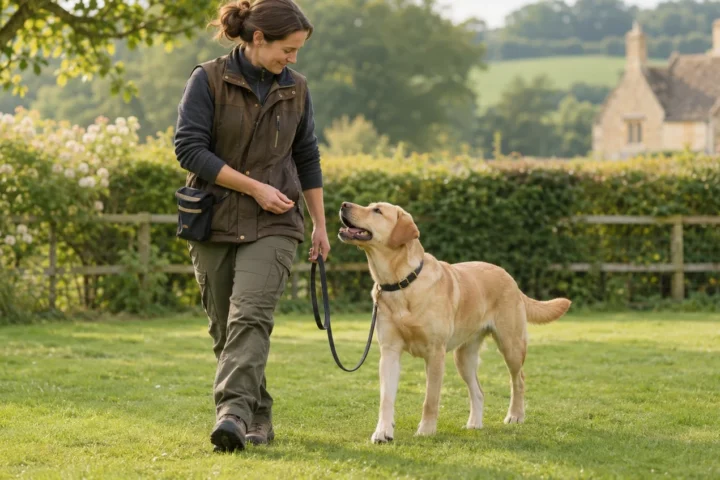
Alessia, owner and director of My Dog’s Trainer, has worked with dogs for 15 years. The question she hears most before a booking is about kennels: owners worry about leaving their dog in them.
If you’re wondering how to book a dog trainer, it’s simpler than most people expect. Here is how it works, from the first call to the start date, and what to sort out before your dog arrives.
What happens when you book a dog trainer with us?
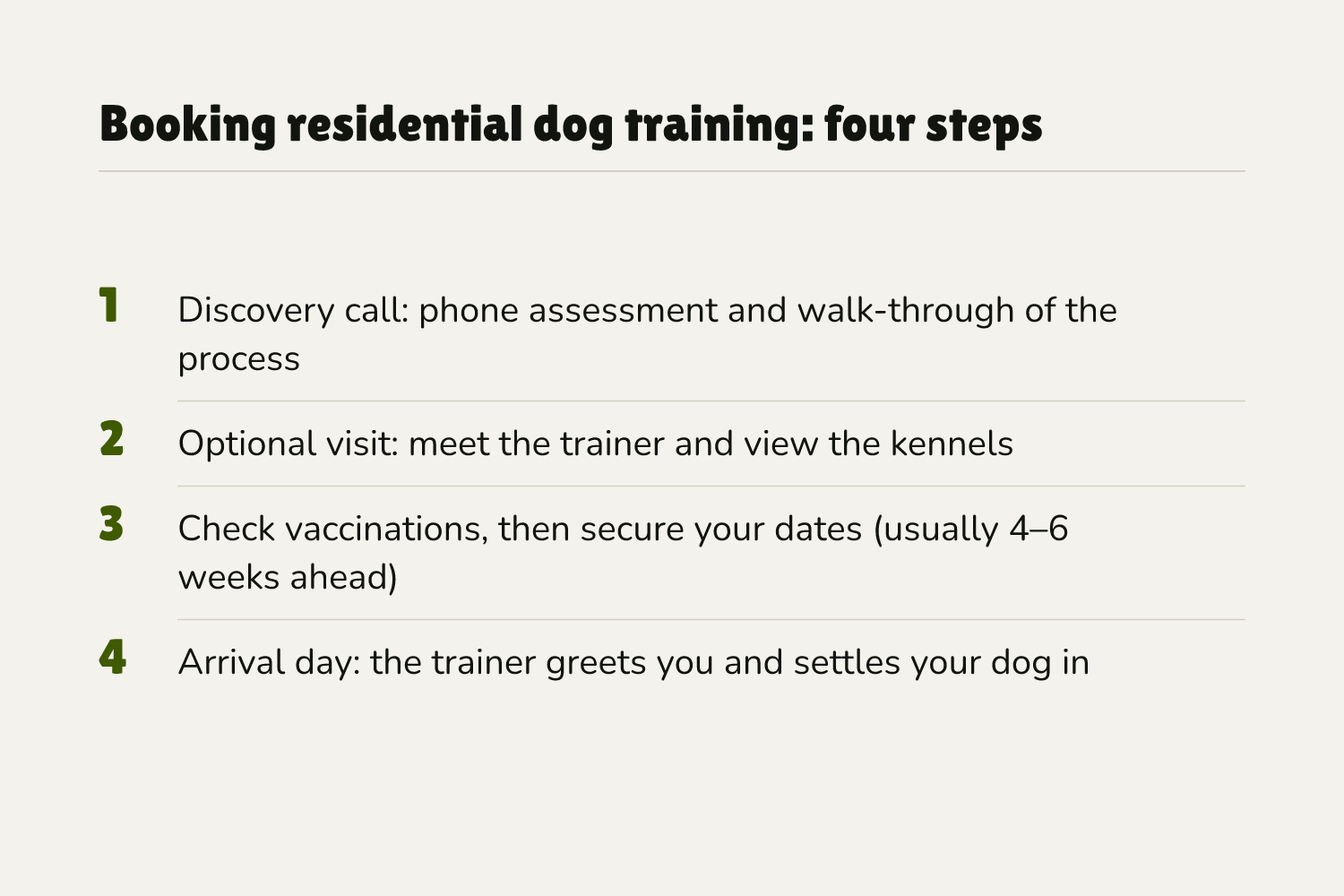
The process runs in a few clear stages: a phone assessment, an optional visit to meet the trainer and see the kennels, then securing your dates. You only commit once you are happy with each step.
- Discovery call. We carry out a telephone assessment and take you through the process from start to finish, including how to secure a slot.
- Optional visit. You can meet the trainer and view the kennels before you commit.
- Secure your dates. Once you are happy, you book your slot. Check your dog’s vaccinations first (see below).
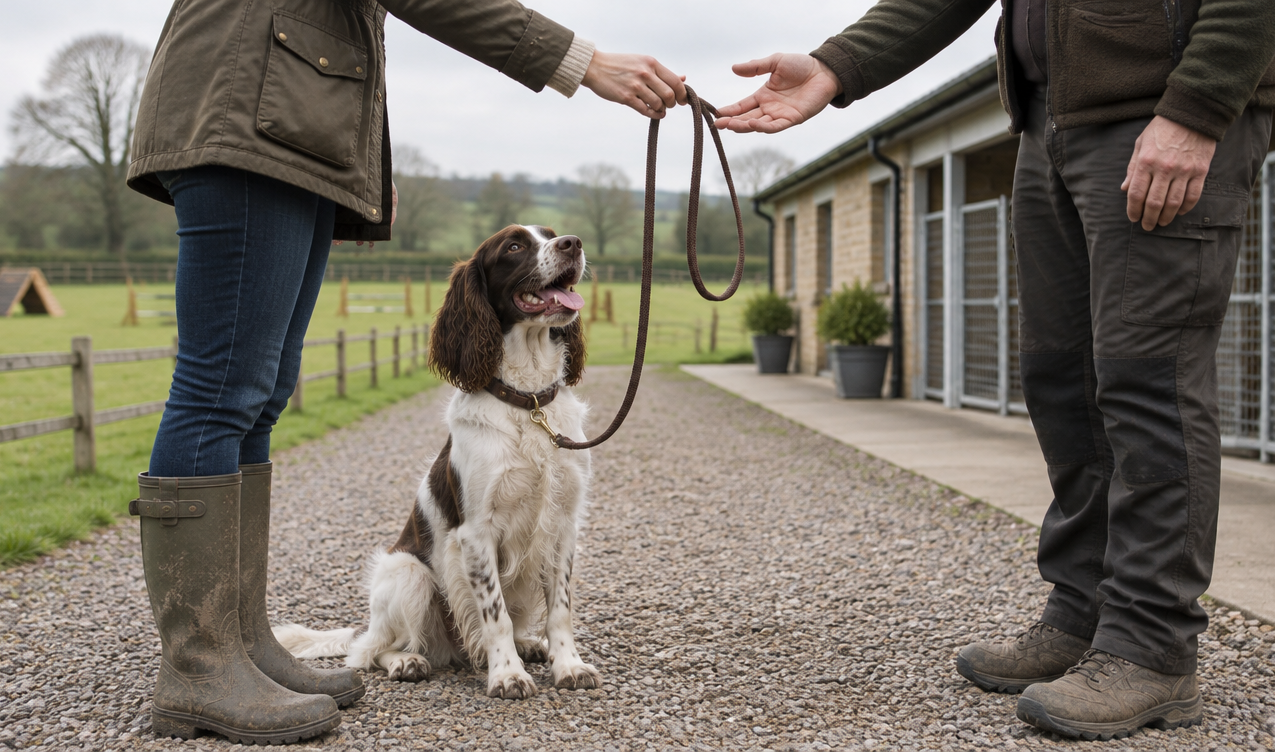
- Arrival day. The trainer greets you and your dog, and settles your dog into the kennels.
What do we ask on the discovery call?
We need a full picture of the behaviour so we can recommend the right course. The call is about understanding your dog, not judging you.
- What the dog does. The behaviours you see, and when they started.
- Possible triggers. Anything that may have set the behaviour off, and whether it is linked to a particular place or environment.
- What you have already tried. This saves time and shows us what has and hasn’t helped.
- Bite history. We need to know about any, so we can plan safely.
Is it worth visiting the kennels before booking?
Yes. Seeing where your dog will stay is the quickest way to settle the worry most owners arrive with. The visit also lets the trainer see your dog in person.
One recent owner came to us with a reactive dachshund. The dog struggled to settle in public, barked at people and other dogs, and was easily triggered away from home. We explained the process, and the owner met the trainer and saw the kennels.
The owner was reassured to find the kennels more spacious and comfortable than they had imagined. The visit also showed the trainer how the dog behaved, and it became clear the reactivity came from anxiety rather than arousal or guarding. The owner booked, and the same trainer greeted them on arrival and settled the dog in.
For more on managing a reactive dog in the meantime, see our guide to managing a reactive dog.
How much does it cost to book a dog trainer?
Our courses start from £745 per week, fully inclusive, and the fee is a one-off that includes lifetime support. The more complex the behaviour, the more time your dog needs, so the length of stay is what moves the price.
The Basic course is one week and covers up to two behaviours. The Standard course is two weeks and covers up to four. Severe issues need the longer Advanced or Reactivity courses. See all options and prices on our residential courses page.
What should you prepare before your dog arrives?
Sort the vaccinations first, then the practical items. Licensed boarding kennels in England must see proof of up-to-date vaccinations as a condition of their licence, so we cannot accept a dog without it. Defra’s guidance for dog boarding kennels sets this out.
- Check vaccinations before you book. Owners are told about this but often don’t check until it is nearly time to arrive, and find out too late. Confirm the dates before securing your slot.
- Update flea, tick and worming treatment. These need to be current.
- Bring enough familiar food. A sudden change of diet can upset your dog’s stomach, which is the last thing you want during a stay in a new place. Pack enough of the usual food for the whole stay.
- Pack something familiar. Blankets or toys help a dog settle into a new place.
How far ahead should you book?
Usually 4–6 weeks ahead. We sometimes have cancellations, so it is worth asking if you need something sooner.
When should I get professional help first?
If your dog shows discomfort or aggression that could be caused by pain or illness, speak to your vet before booking training. Treating a medical cause comes first, and training won’t fix it. The RSPCA’s advice on finding a behaviourist covers this too.
Otherwise, if the behaviour is affecting daily life, the next step is a call. Use the booking enquiry form and we will ring you back. We run centres in Southampton, Oxfordshire and South London.
Key takeaways
- Booking starts with a phone assessment, and you can visit the kennels and meet the trainer before committing.
- Check your dog’s vaccinations before you secure dates, not just before arrival.
- Book usually 4–6 weeks ahead; cancellations sometimes open earlier slots.
- Bring enough of your dog’s usual food for the whole stay.
- See a vet first if aggression or discomfort could be pain-related.
Frequently asked questions
What does it cost to train your dog?
Our residential courses start from £745 per week, fully inclusive, as a one-off fee that includes lifetime support. The more complex the behaviour, the more time your dog needs, which means a longer stay. We will recommend the right course on your discovery call.
Can I see the kennels before I book?
Yes. You can meet the trainer and view the kennels before you commit. One recent owner found the kennels more spacious and comfortable than they had imagined, and the visit also lets the trainer see how your dog behaves in person.
What do I need to bring when my dog arrives?
Bring proof of up-to-date vaccinations, as licensed boarding kennels in England must see this as a condition of their licence. Also bring evidence that flea, tick and worming treatment is current, and enough familiar food for the whole stay. Blankets or toys that smell of home can help your dog settle.
How far in advance should I book?
Usually 4–6 weeks ahead. We sometimes have cancellations, so it is worth asking about earlier dates. Check your dog’s vaccinations before you secure a slot, so you don’t have to rearrange.
When should I see a vet before booking?
If your dog is showing discomfort or aggression that could be related to pain or illness, speak to your vet first. Training can’t resolve a medical problem, so it is best to rule that out before booking.