By Caitlin Neeson, Trainer at our Oxfordshire centre
The right place depends on what you want to change and what your dog is like. Group classes suit early training and working around distractions. A trainer who visits your home suits problems that only happen there. Residential training suits most other issues, from lead walking to reactivity.
Caitlin Neeson, a trainer at our Oxfordshire centre with 8 years of experience working with dogs, says the mistake she sees most is picking an option without thinking about the individual dog. Here is how to work out where to get your dog trained.
What should I decide before choosing where to train my dog?
Start by deciding what you want to achieve. Is it a specific behaviour problem, or general obedience? That one answer narrows the options quickly.
Caitlin asks this first with every owner. She also recommends a force-free approach built on positive reinforcement, whichever route you choose. Ask any trainer how they teach before you book.
Then think about your dog. A dog who is very sociable and excited to see other dogs may find a class overwhelming. Caitlin says that kind of dog is not set up to succeed in a room full of other dogs.
What are group classes good for, and where do they fall short?
Classes are good for the start of training, especially puppy classes. They give you a chance to begin working around distractions in a controlled setting, with a trainer on hand.
They fall short on specific behavioural work. Caitlin points out that classes are not designed for particular areas of development, such as improving impulse control. Everyone in the room is working on the same exercises, so there is little room to tailor the plan to one dog.
If your dog is easily overexcited by other dogs, a class can make things harder rather than easier. In that case, one-to-one training is a better starting point.
When is a trainer who visits your home the better choice?
Choose a home visit for behaviour that only happens in your house. Caitlin gives two examples: resource guarding one particular person or space, such as the sofa, and toilet training.
These cannot be recreated in a kennel training environment. The trigger is your sofa, your family member or your floor, and a trainer needs to see it where it happens. We are open about this: for these problems, a home-visit trainer is the better call than a residential stay. Our housetraining guide covers what you can start doing yourself.
What problems suit a residential stay?
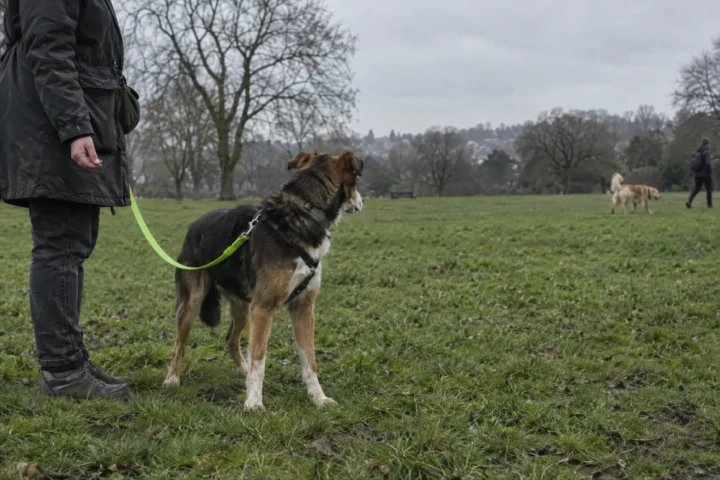
Caitlin’s view is that residential training is great for most issues. That includes lead walking, recall, general obedience, and reactivity or aggression that needs concentrated work.
Your dog stays at one of our licensed centres, so training is intensive and consistent. The course you need depends on how many behaviours you want to work on and how severe they are:
- Basic: a 1-week stay covering up to 2 behaviours, such as lead walking or basic recall.
- Standard: a 2-week stay covering up to 4 behaviours, including on-lead reactivity and puppy training.
- Advanced / Working Breeds: a 3-week stay for specific and severe issues, such as dog reactivity and excessive barking.
- Reactivity: a 4-week stay for the most severe behaviours, such as people reactivity and dog aggression.
Courses start from £745 per week, fully inclusive. You can see them all on our residential dog training courses page.
How do the three options compare?
| Option | Best for | Falls short on |
|---|---|---|
| Group classes | Early training, puppies, first work around distractions | Specific behaviour work such as impulse control; overexcited dogs |
| Home visits | Home-specific problems, such as guarding one person or space, and toilet training | Issues that need intensive, consistent work away from home |
| Residential stay | Most issues, including lead walking, recall and reactivity | Problems that can’t be recreated in a kennel; dogs who dislike kennels |
What does a residential stay involve day to day?
A typical day includes three to five training sessions, usually around 30 minutes each. How the sessions are paced depends on the dog and how they learn best.
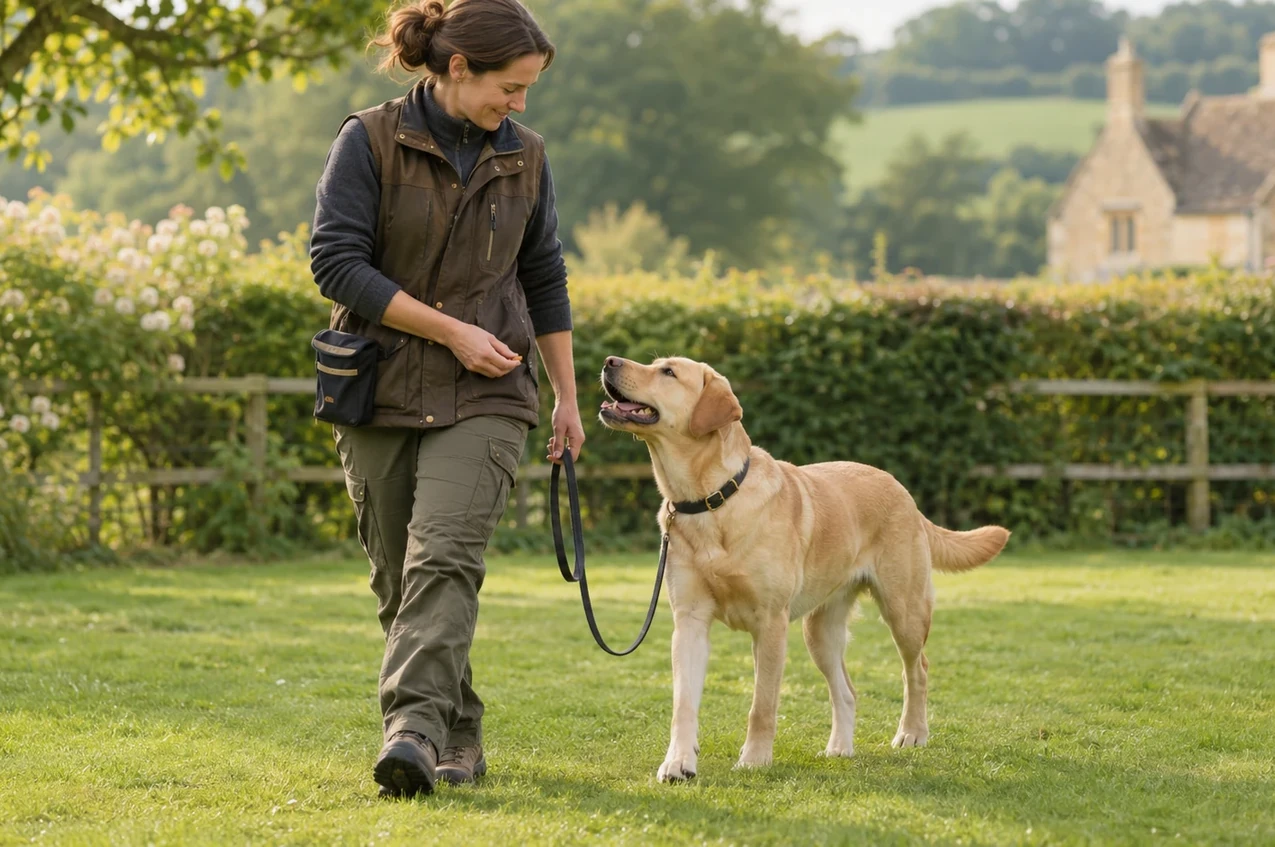
Caitlin recently worked with a dog who came in for loose lead training. The team built up the value of staying by the trainer’s side, and it did not take many sessions before the dog began offering the behaviour on her own.
How soon owners see change at home depends on how consistently they follow the training once the dog is back. Nobody can honestly guarantee a timeframe, because every dog is different. Each stay ends with a handover lesson and a written plan, so you know how to keep it going.
When should you see a vet or behaviourist first?
See your vet first if your dog’s behaviour changes suddenly. A sudden change can be a sign of pain or illness, and training will not fix that.
A behaviourist is the right person when you need to understand why your dog is doing something, or what might be reinforcing it. Training then builds on that understanding.
Residential training is also not the answer for problems tied to your home, such as guarding a particular person or the sofa. Use a home-visit trainer for those.
What if my dog doesn’t like kennels?
Not every dog suits a kennel environment, and that is fine. Caitlin still thinks it is worth trying.
“Not every dog is designed for a kennel environment, but it’s worth a try to see how they’d get on. They might surprise you and enjoy it!” says Caitlin, a trainer at our Oxfordshire centre.
If you live near Oxford, Abingdon, Witney, Bicester, Banbury or Didcot, you can see our Oxfordshire residential training centre. Proof of up-to-date vaccinations is required for any kennel stay.
Frequently asked questions
How much does it cost to train a dog?
It varies with the type of training. Our residential courses start from £745 per week, fully inclusive. The fee is a one-off and includes lifetime support.
Are puppy classes worth it?
Yes, for the start of training. Classes give puppies a first chance to work around distractions. They are less suited to targeted work, such as improving impulse control.
Should I train my dog at home or send them away?
It depends on the problem. Behaviour that only happens at home, such as guarding one person or space, or toilet training, is better handled by a trainer who visits your house. For most other issues, a residential stay works well.
How long before I see results?
It depends on the dog and on how consistent you can be at home afterwards. We can’t promise a set timeframe.
Do I need a vet before training?
Call your vet first if you notice a sudden change in your dog’s behaviour. Training comes after any health cause has been ruled out.
If you think a residential stay might suit your dog, send us an enquiry and we will talk through the right course with you.